Fujisawa Net Museum

資料一覧

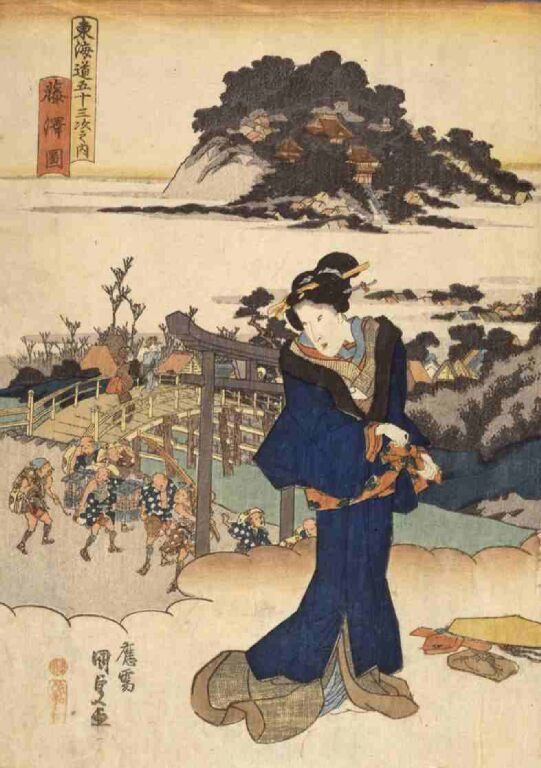
Utagawa Kunisada(Utagawa Toyokuni Ⅲ)
1833

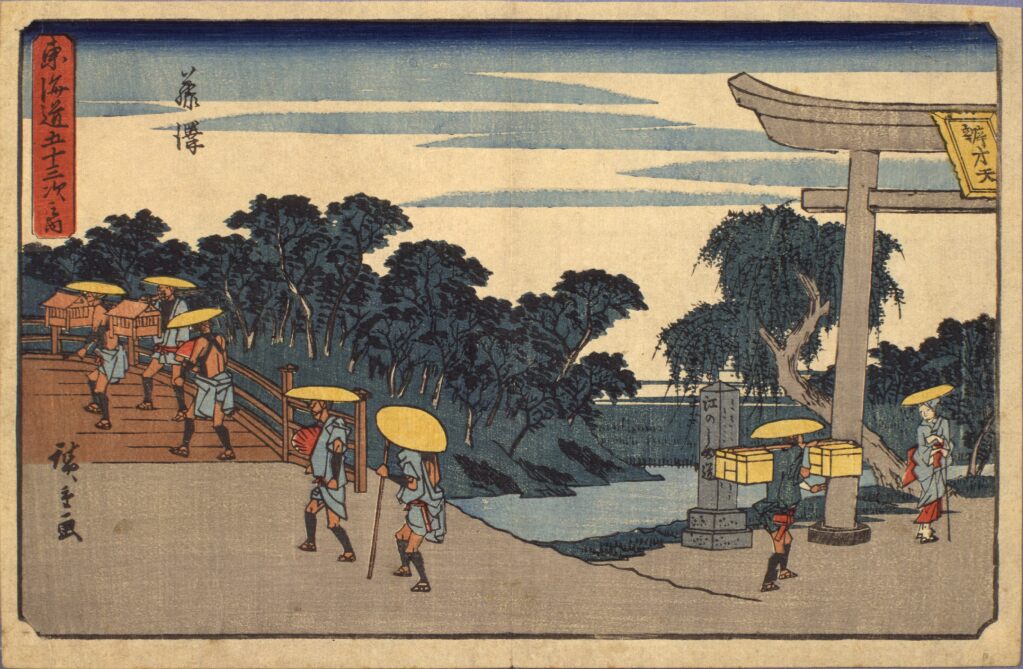
The background landscape of this picture is based on the Hiroshige’s Hoeidou edition of the Toukaidou series “Fujisawa, Yugyouji Temple”. The Toriido Bridge illustrated at the back of a woman is Daigiri Bridge (Today’s Yugyouji Bridge) and the First Torii Gate of Enoshima Shrine, which used to stand at this place is illustrated by the bridge. In Hiroshige’s work, group of pilgrims heading to Mt. Oyama carry a large wood sword and an omiki-waku (container that carries water or liquor from Mt. Oyama), are illustrated on the bridge, but in Kunisada’s picture they moves to the front of the Torii Gate. The lady illustrated in front fastens obi belt as she departs for a journey and travel kits such as cigarette case, a luggage wrapped by a close and a sedge-woven hat are illustrated by the foot.


“Beauties with Landscapes of the Toukaidou Highway”
Known with the more familiar title of “Toukaidou with Beauties”, this series illustrates the beauties with the customs of the related regions at the foreground and the sceneries of fifty-three stations of the Toukaidou on the background. This series has a special feature that the background sceneries are based on the “Hoeidou Edition of the Toukaidou Highway” series produced by Utagawa Hiroshige. Although the sceneries illustrated from Miya post station to Kyoto (Although Yokkaichi post station is the only exception) are produced based on Kunisada’s original designs.

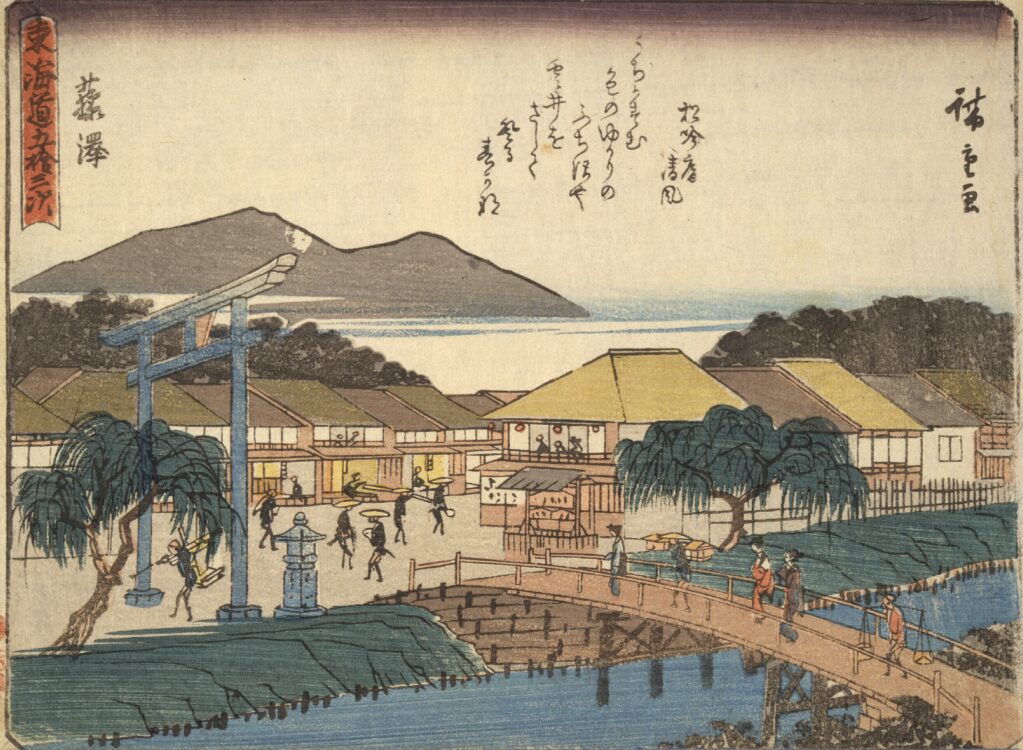
東海道五拾三次之内 藤沢図

Fujisawa from the series “Fifty-three Stations of the Toukaidou Highway”

Artist: Utagawa Hiroshige
1847-1852 (Kouka-Kaei 5), Publisher: Maruya Seijirou

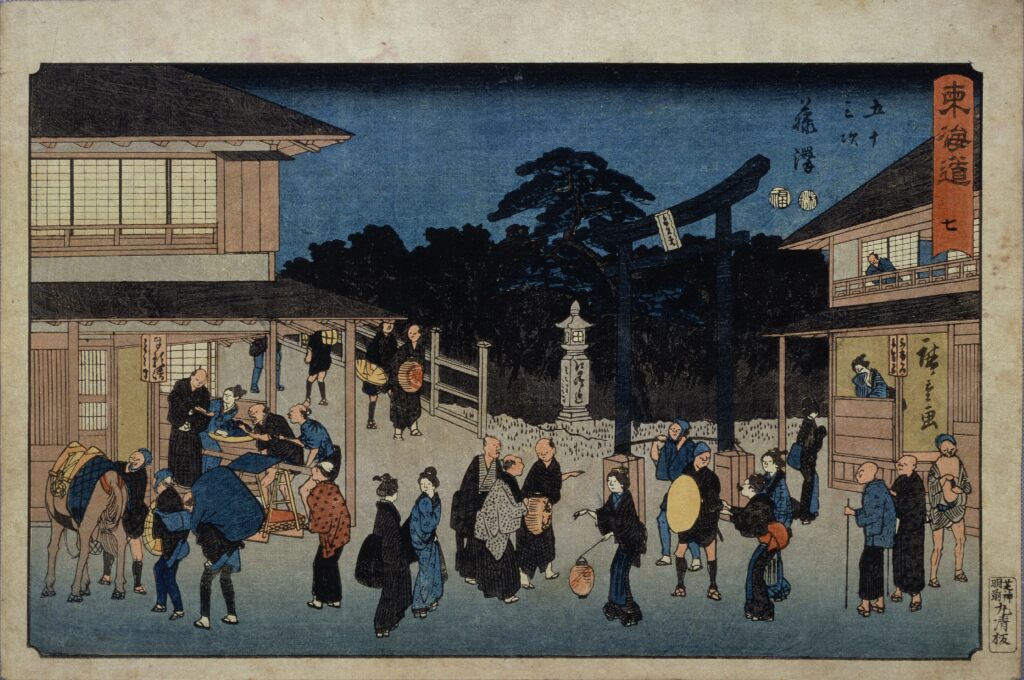
At the reisho script series, the night scene of Fujisawa post station is illustrated. The Torii gate illustrated at the right is the entrance of the Enoshima “The First Torii gate”. The bridge illustrated in the middle is Daigiri Bridge (Today’s Yugyouji Bridge). Various kind of people, such as the travelers arriving at the post station and woman touting customers are illustrated.
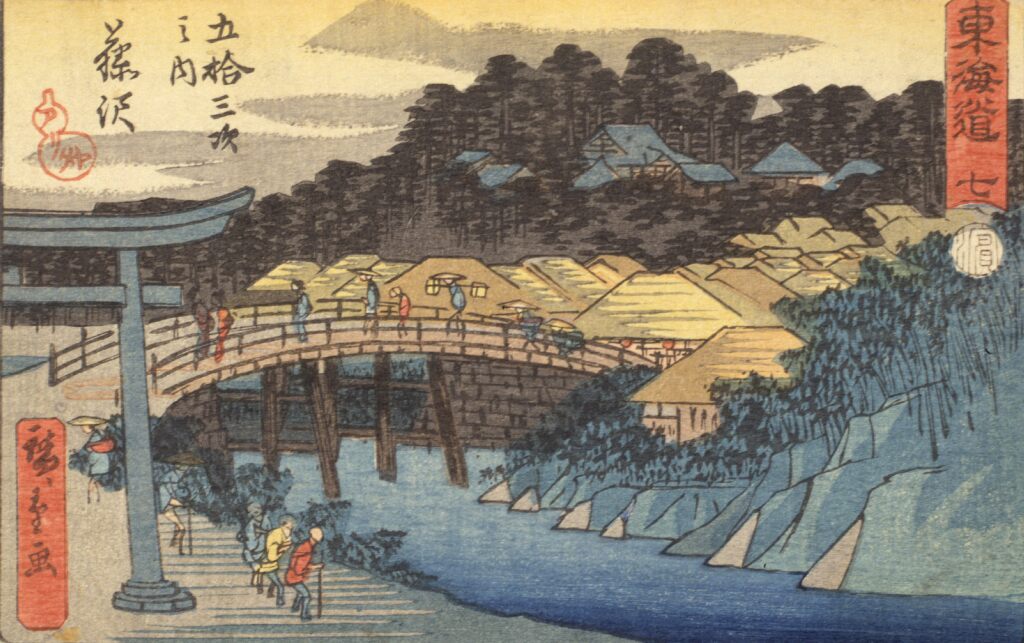
At the vertical picture series, the pine trees of Nango and Mt. Fuji are illustrated. This place was famous for its scenic point of “Hidari-Fuji”, or the Mt. Fuji appears from the left. “Hidari-Fuji” along the Toukaidou Highway is very rare since this can be seen only from Nango and Yoshiwara post station.

This series is called Reisho script version of the Toukaidou according to the script style of the title, and recognized as the one of the three premier series of the Fifty-three Stations of the Toukaidou Highway with Houeidou version and Gyousho script version. In the picture the view of the twilight time of Fujisawa Post Station is illustrated. The Torii gate on the right is the First Torii Gate, which is the entrance of Enoshima Island, and the bridge on the left is the Daigiri Bridge (present day Yugyouji Bridge). The enliven mood of the station with the employees of motels trying to catch travelers just arrived at the station is illustrated.

Utagawa Hiroshige
Kansei 9~Ansei 5 (1799~1858)
Hiroshige was a pupil of Utagawa Toyohiro. He also studied varieties of painting styles from Kano school, nan-ga (southern Chinese painting style), and Shijō school. He was active as an ukiyo-e artist from Bunsei 1 to his death (1818~1858). He first produced pictures of beautiful women, Kabuki actors and worriers, but from the Tempō era he was acknowledged as a leading landscape artist. He published many pictures of famous places such as the series “Fifty-three Stations of the Tokaido”. Hiroshige’s the other fortes were kachoga (picture of birds and flowers) and animal pictures.

東海道七 五十三次 藤沢(隷書東海道)

No.7: Fujisawa, from the series “Fifty-three Stations of the “Tōkaidō” (Reisho script version)


Page Top