Fujisawa Net Museum

資料一覧

Utagawa Hiroshige
The production date:1858

Harimaze-e (Paste the mixed pictures) was the picture that several famous places (landscapes, local specialties, stories, etc.) are illustrated in a single picture, and Hiroshige produced several harimaze-e works that illustrated the places all over Japan, including places along the Toukaidou Highway.
In the first painting, from the top layer, Ninhonbashi Bridge (A summer’s custom, a tea stand that provides the barley hot tea.), Shinagawa (Matoi, or a straw craft, which was a local product of Omori. People brought back matoi as a souvenir for the pilgrimage to Mt. Oyama), Kanagawa (A scenery of port), Hodoga-ya (Tome-on’na, or the women who tried to bring in the customers to their inns. People stayed overnight at Hodogaya, before they go back to Edo.), and Kawasaki (Pear, a local specialty of Daishi-gawara) are illustrated.
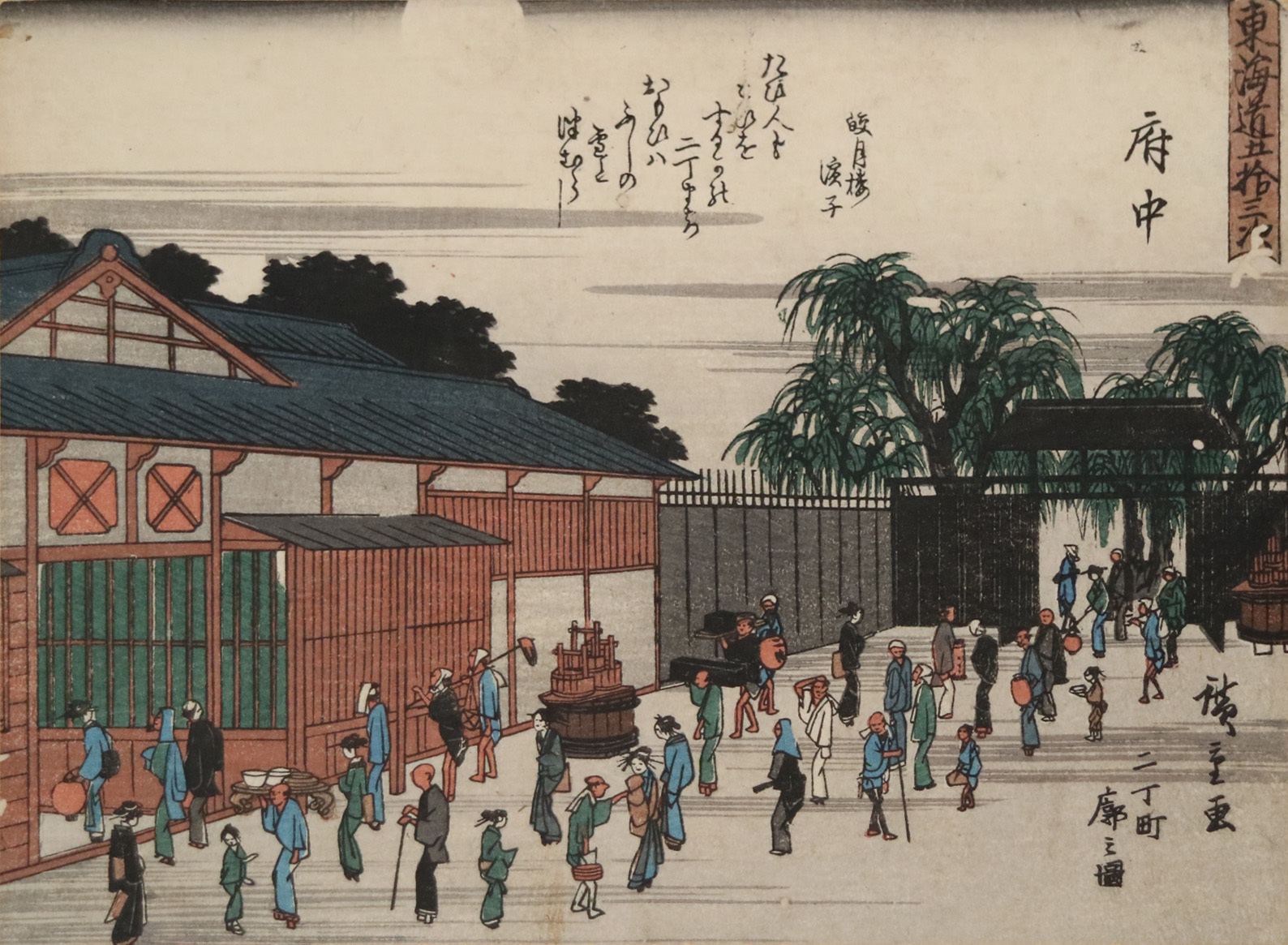
In the second painting, from the right below, Totsuka (Yakimochi or a toasted rice cake. Since yakimochi was sold at the border of Shinano village and Hirado village, along the slope, this slope was named as Yakimochi Slope), Fujisawa (A woman serving food for the customers of inns), Yotsuya-oiwake (Yotsuya of Fujisawa city. Oiwake is a fork of road. Oiwake as the place to change human labors and horses are symbolically illustrated with a palanquins and legs of horses), Isehara (A city located at the foot of Mt. Oyama) and Otaki (One of the falls located in Mt. Oyama. Pilgrims purify their body by standing under the waterfall.) are illustrated.
In the third painting, from the right below, Tamura (A ferry to cross the Sagami River from Yotsuya to Oyama), Koyasu (A village located along the road to Mt. Oyama between Isehara and Mt. Oyama.), Mae Fudou of Oyama (A hall located in front of Oyama Temple.), Sekison-ji Raigou-dani (A place where at the time sun sets into Mt. Fuji located at west, the atmosphere of “the decent of Amida Nyorai” emerges.), and Ryoben Waterfall (One of the waterfalls located in Mt. Oyama. It is said that Saint Ryoben purified his body in this waterfall when he opened the Oyama Temple in this place.) are illustrated.
All the famous places and specialties invite viewers to the pilgrimage to Mt. Oyama.

Traveling along Oyama Road with Harimaze-e Pictures

Mibu Masanobu
1897 (Meiji 30)

Beside the bronze Torii gate at the north entrance of the island, at the bottom of this picture, the sign reads “new land” indicating this place is the reclaimed ground that was established during Meiji period. At the both sides of the approach to the shrine, the names of inns and hotels, such as “Edo-ya”, “Sanuki-ya”, “Sakai-ya”, “Iwamoto-rou” and “Ebisu-ya” are seen. Going further through the second Torii Gate is a “School”. This is the Enoshima branch of Katase Elementary School, and there was a three story Buddhist pagoda during the Edo period (Today, the community center, Enoshima Shimin no Ie is located.). Going to the southern direction (to the upper part of the map) from the school, there is a “Fukuishi” a stone that a master therapist of acupuncture Sugiyama Kengyou stumbled and reached to the insight of the therapy. Going upward from the stone, there is “Hetsu-no-miya Shrine”. The neighbor of this shrine is “Yasaka Shrine”, and this shrine still exists today. Going eastward from “Hetsu-no-miya Shrine”, there is “Nakatsu-no-miya Shrine” and going even further to the southern direction, a western style building appears on the left. This building was considered a villa of Samuel Cocking, a merchant from Yokohama and he lived here during Meiji period. Going upward from the villa, there is a “Botanical Garden” enclosed with bricks (Today’s Samuel Cocking Garden). Going even further to the southern direction, there is “Okutsu-no-miya Shrine” and going down the steps, there are “Chigo-ga-fuchi“ abyss and “Miiwa (Iwaya)” sea cave.
At the left side of the bronze Torii gate, at the bottom of this picture a fishing village “Higashi Machi” is extended. The “Shouten-jima Island” that was swelled out at the time of the Kantou Earthquake is illustrated as if it sticks out from the ocean.

True View of Enoshima Island at Sagami Province


Page Top