Artist: Utagawa Toyokuni III (Kunisada)
1852 (Kaei 5)
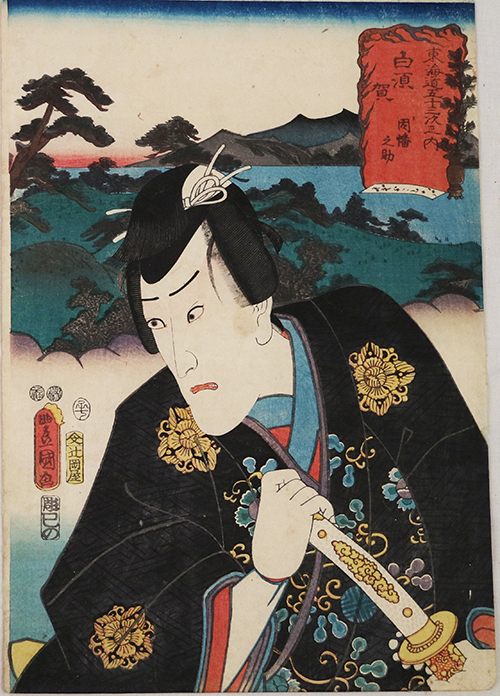
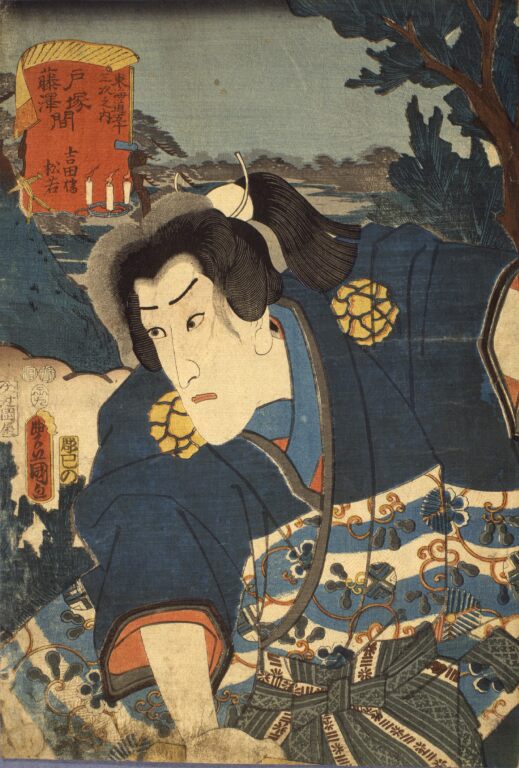
At the background of this picture, the landscape of the vast Suruga Bay and the sale boats are illustrated. The figure illustrated in front is Shinobu, a character from “Go-ban Taiheiki Shiroishi Banashi (A Chronicle of Great Peace Played out on the Chess: The Story of Shiroishi)”. Shinobu’s father was killed by a samurai, and she, together with her elder sister Miyagino, avenges the murder of her father. Trained under a military specialist Yui Minbu-no-suke (no12), then assisted by Kanae Yagorou (no.10), they finally complete their revenge mission. The kabuki actor who took part of Shinobu was Iwai Kume-saburou III, and he was very popular and known for his beauty.
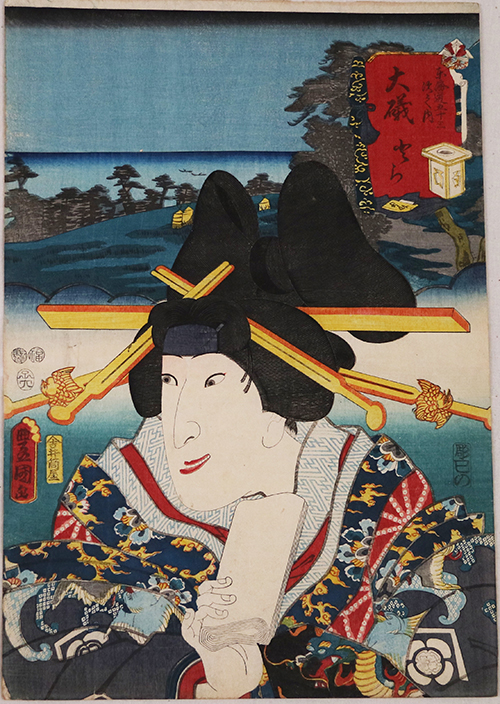
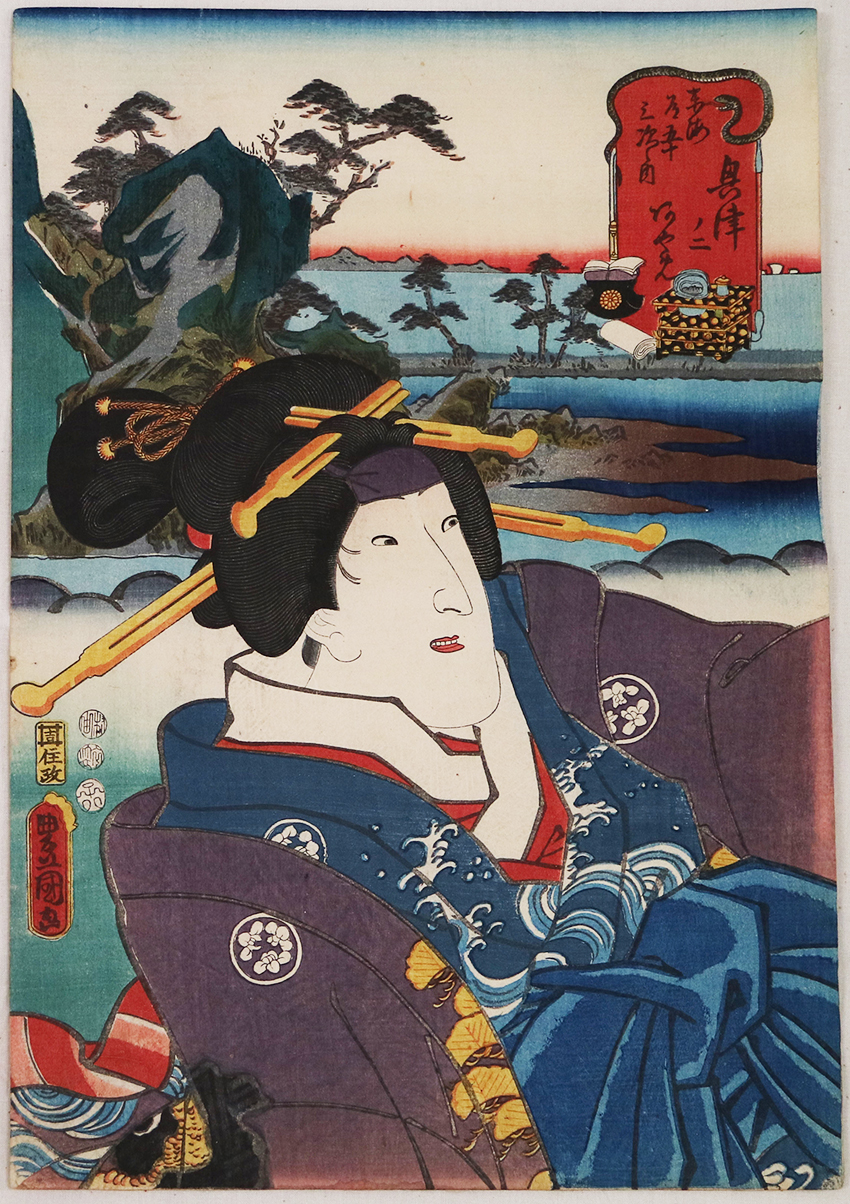
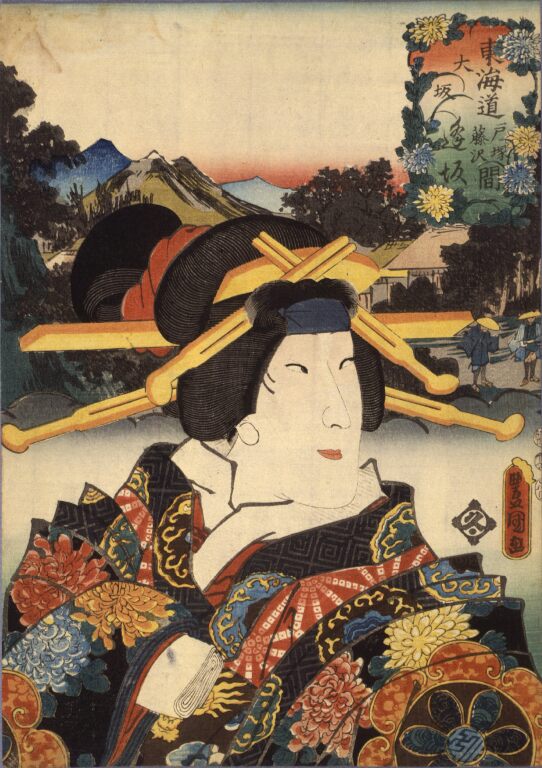
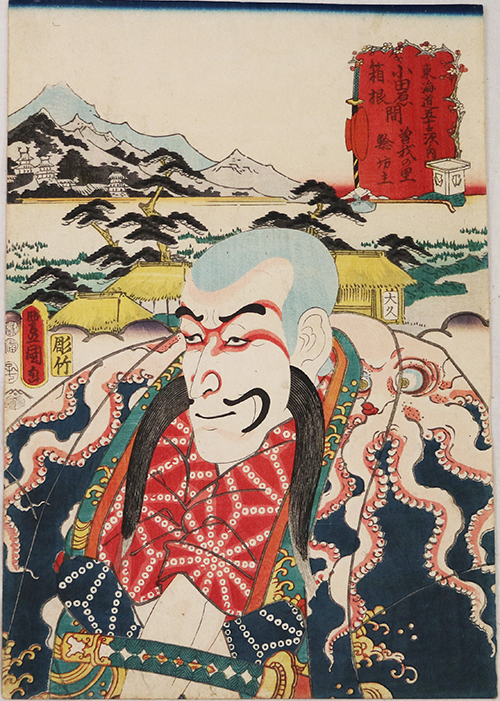
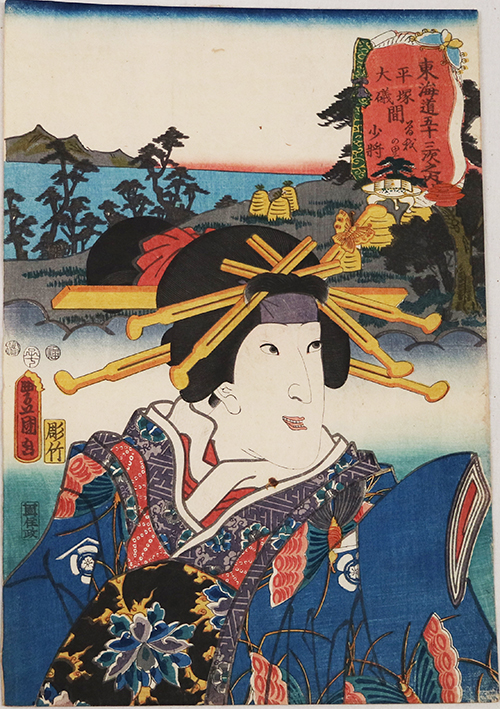
These works are part of the series “Actors Assorted in Fifty-three Stations of the Toukaidou”.
Right now 140 works of this series are found. The artist Toyokuni III was one of the most popular
ukiyo-e artists. The landscape of the post station is illustrated at the background, and a figure
in front is a character of kabuki play who has a connection to the post station. Also, all figures’
portraits are based on the famous kabuki actors.
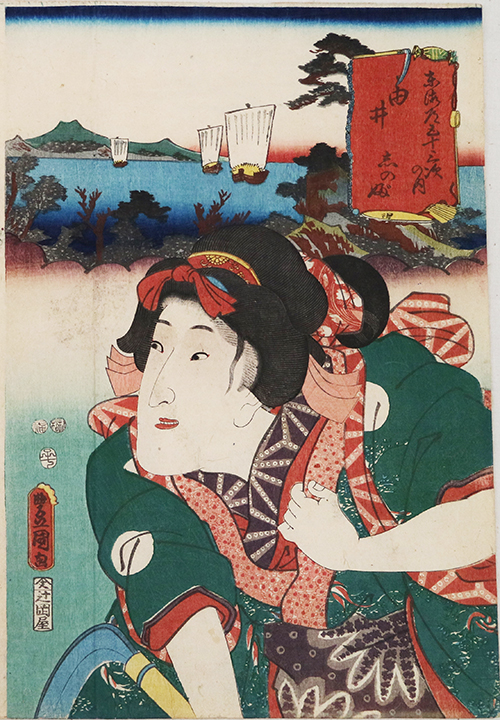
At the background of this picture, the landscape of the vast Suruga Bay and the sale boats are illustrated. The figure illustrated in front is Shinobu, a character from “Go-ban Taiheiki Shiroishi Banashi (A Chronicle of Great Peace Played out on the Chess: The Story of Shiroishi)”. Shinobu’s father was killed by a samurai, and she, together with her elder sister Miyagino, avenges the murder of her father. Trained under a military specialist Yui Minbu-no-suke , then assisted by Kanae Yagorou , they finally complete their revenge mission. The kabuki actor who took part of Shinobu was Iwai Kume-saburou III, and he was very popular and known for his beauty.